
Theory of change
A strategic approach to reducing social exclusion faced by people with disability.
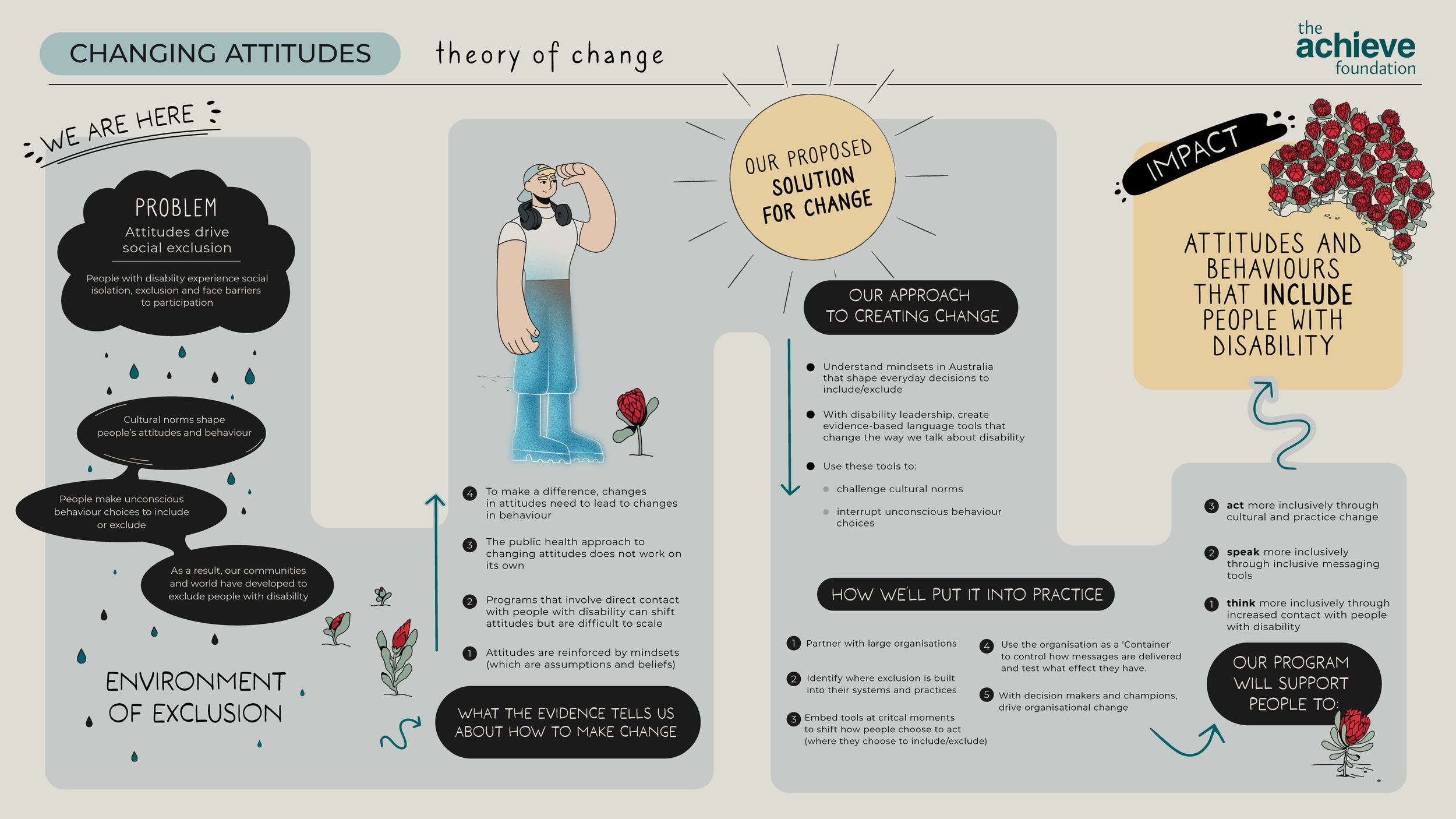
Our theory of change is a strategic approach to reducing the social exclusion faced by people with disability. The solution focuses on an environment shaped by cultural norms and unconscious habits that exclude and limit participation. The approach focuses on understanding mindsets and creating evidence‑based reframing tools developed in collaboration with disability leaders. In partnership with organisations to implement, the strategy works to shift systems and embed these tools so behaviours of exclusion are disrupted. The goal is to help people think, speak, and act more inclusively.
Theory of Change text version
Problem: Attitudes drive social exclusion. People with disability experience social isolation, exclusion and face barriers to participation. Cultural norms shape people’s attitudes and behaviour. People make unconscious behaviour choices to include or exclue. As a result, our communities and world have developed to exclude people with disability.
What the evidence tells us about how to make change:
Attitudes are reinforced by mindsets (which are assumptions and beliefs)
Programs that involve direct contact with people with disability can shift attitudes but are difficult to scale.
The public health approach to changing attitudes does not work on its own.
To make a difference, changes in attitudes need to lead to changes in behaviour.
Our approach to creating change:
Understand mindsets in Australia that shape everyday decisions to include/exclude.
With disability leadership, create evidence-based language tools that change the way we talk about disability.
use these tools to challenge cultural norms and interrupt unconscious behaviour choices.
How we’ll put it into practice:
partner with large organisations
Identify where exclusion is built into their systems and practices
Embed tools at critical moments to shift how people choose to act (where they choose to include/exclude)
Use the organisation as a “container” to control how messages are delivered and test what effect they have
With decision makers and champions, drive organisational change.
Our program will support people to:
think more inclusively though increased contact with people with disability
speak more inclusively through inclusive messaging tools
act more inclusively through cultural and practice change
Our impact: Attitudes and behaviours that include people with disability